

Wooden modular houses
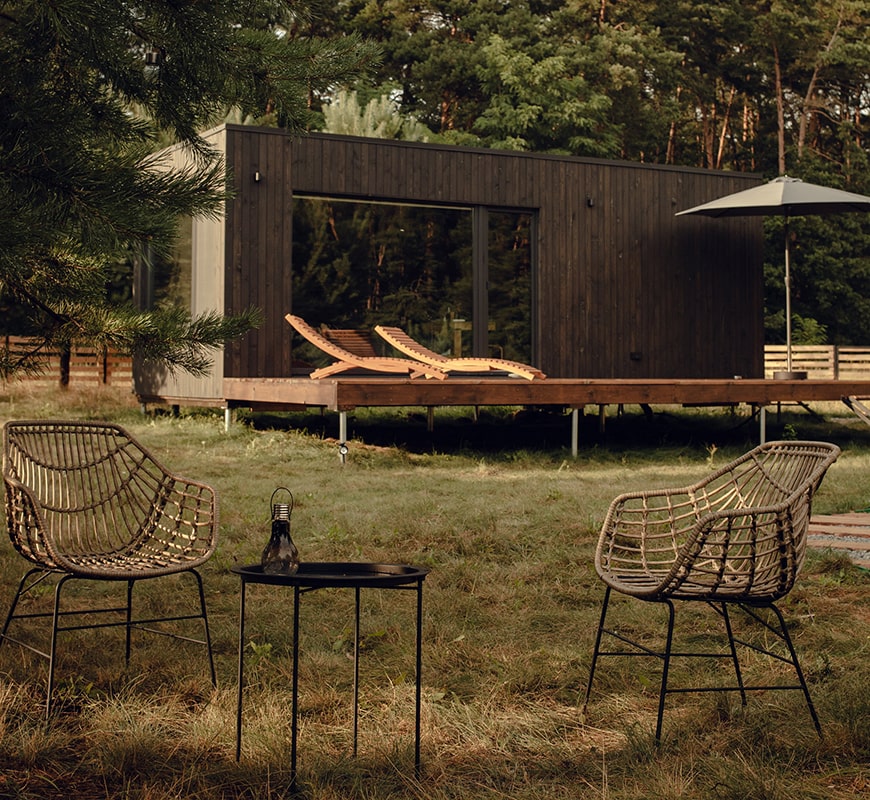
In a world seeking fast, energy-efficient, and eco-friendly ways to build, wooden modular homes are becoming increasingly valuable. Over the last decade, the modular construction market in the EU has grown by more than 15% annually, and in the US and Canada, this technology already accounts for approximately 20% of the residential construction market.
Ukraine is also experiencing rapid growth – over the past 5 years, demand for wooden modular houses has grown approximately threefold. The combination of natural wood with modern factory production technologies allows for the creation of cosy, eco-friendly and affordable housing in a matter of weeks, reducing construction time by 3-5 times compared to traditional methods.
What is a wooden modular house?
A wooden modular house is a structure assembled from prefabricated factory modules (sections) that are manufactured entirely or partially in controlled factory conditions. Each module is a comprehensive unit that includes load-bearing walls, a roof, and flooring, and is often already equipped with integrated utilities and interior finishes.
Advantages of wooden modular houses
Speed of construction. The production of modules at the factory takes 2-6 weeks, and installation on site takes 1-3 days – the entire cycle, from design to finished housing, can take as little as 1-2 months.
Energy efficiency. Thanks to insulation with mineral wool, eco-wool or cellulose and the properties of wood as a heat-retaining material, the modules often meet passive house standards, consuming up to 70-90% less energy for heating and cooling compared to traditional housing.
Eco-friendliness. Modular construction significantly reduces waste by using renewable resources such as wood, mineral wool, etc., so the houses have a low carbon footprint.
Quality and precision. Factory manufacturing allows for strict control at all stages of production, from sealing joints to ensuring the highest quality heat and sound insulation, as well as eliminating defects and complying with building standards.
Mobility. Modules are easy to transport and assemble at a new site, allowing you to change your place of residence without losing your capital.
Design flexibility. Thanks to the modular design principle, the house can be configured to suit individual needs, changing the area, shape, layout of rooms or adding new modules even after commissioning.
Cost. Thanks to controlled production, optimised use of materials and reduced construction times, wooden modular houses are competitively priced. With mass production, the cost of such housing can be significantly lower than traditional construction, without compromising on quality.
Production and construction of wooden modular houses
Modular wood construction is a high-tech process that includes:
Design: At this stage, detailed drawings and 3D models of the future building are created, taking into account architectural, structural and functional requirements. Materials are selected, engineering systems (power supply, ventilation, heating, water supply) are developed, and the type of insulation (mineral wool, ecowool, polyurethane foam, etc.) is determined. The architecture of the facade is designed taking into account energy efficiency and the aesthetic preferences of the customer.
Wood selection and preparation: High-quality wood with a moisture content of 12-16% is used for modular construction, which undergoes chamber drying to stabilise dimensions and prevent deformation. The wood is treated with antiseptics to protect it from fungi and pests, as well as fire retardants to improve fire safety. In Europe, glued laminated timber, an engineering material with increased strength, is widely used for load-bearing structures, and CLT (Cross Laminated Timber) is used for large panels. In Ukraine, however, wooden frames with insulation (mineral wool, ecowool) covered with OSB, particleboard or MDF are more commonly used, which provides good heat and sound insulation.
Prefabrication: In a controlled factory environment, modules are assembled from ready-made elements: frames, insulation, windows, doors, and interior finishes. Engineering communications (electrical, plumbing, ventilation) are pre-integrated into the structure, minimising the need for installation work on the construction site. This increases the accuracy, quality and speed of manufacturing.
Quality control: Each module undergoes comprehensive testing for airtightness (to prevent heat loss and moisture penetration), thermal insulation, sound insulation, and fire resistance following building codes. The strength of the structure and compliance with technical requirements are also assessed to ensure durability and safety.
Transportation and installation: Prepared modules are delivered to the construction site using special platforms. Installation on a pre-prepared foundation takes 1 to 3 days, which significantly reduces construction time compared to traditional methods. After installation, the modules are connected to external utility networks, and the house is ready for use immediately or with minimal finishing work.
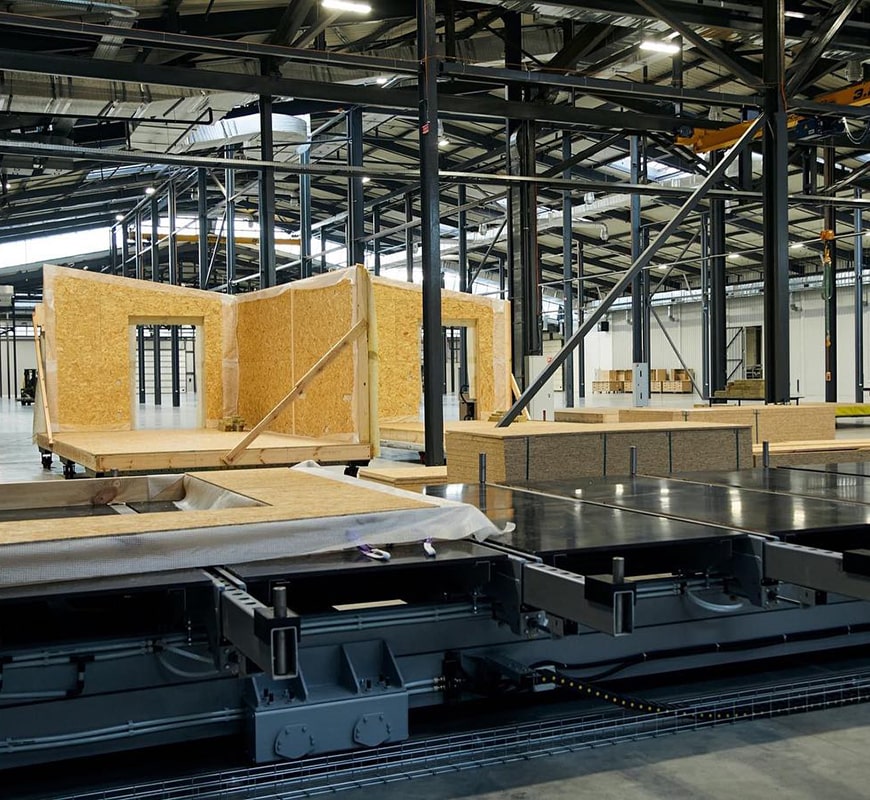
Market situation in Ukraine
The market for modular wood construction in Ukraine is still in its infancy, but it is already showing positive dynamics. According to data from the Association of Prefabricated Construction Manufacturers, more than 312 companies in Ukraine are engaged in the production of modular houses from various materials, including wood, metal, reinforced concrete, SIP panels, and combined structures.
Ukraine already has production sites with an area of over 10,000 square metres, which are capable of manufacturing up to 400-500 modular houses per year, depending on the configuration and complexity of the projects.
According to industry data, the demand for wooden modular houses is growing among private developers and in the recreational housing sector – glamping, camping, nature hotels – and, despite the challenges caused by the war, the need for fast and affordable housing is only growing, which opens up prospects for the development of wooden modular construction in Ukraine.
The experience of the Nordic countries
In the Nordic countries (Sweden, Norway, Finland, Denmark), modular wooden houses have become the standard for sustainable construction. In these countries, wood is a traditional building material, and modular construction allows for optimised costs and accelerated construction while maintaining high quality.
According to Mordor Intelligence research, Sweden continues to dominate the modular housing market in Northern Europe, accounting for approximately 44% of the market in 2024. In Norway, over 80% of the population lives in cities, which contributes to the growth in demand for modular homes. In Denmark, the prefabricated housing market is projected to grow by 8% annually between 2024 and 2029.
According to data from the Swedish Forest Industry Association Swedish Wood, approximately 90% of all low-rise residential buildings (single-storey and two-storey) in Sweden have a wooden frame. This includes both new construction and existing buildings. The association's website presents a wide range of applications for wooden structures in modern modular construction.
The Finnish portal Puuinfo.fi actively promotes modular wood construction technologies, emphasising the advantages of CLT panels and glued laminated timber for building energy-efficient houses.
In this way, the Nordic countries are setting standards for the sustainable and technological development of modular timber construction, which could serve as an example for Ukraine in the development of this promising industry.
Conclusions
Wooden modular houses are not just a trend, but a real answer to modern challenges: energy efficiency, speed of construction, and ecology. They open up new opportunities for the private housing sector, as well as for business, tourism and social projects.
Wood house construction in Ukraine has great potential for the rapid and eco-friendly restoration of destroyed housing, meeting modern European standards of sustainable development. Technologies such as CLT panels, which are successfully used in Canada, the Nordic countries and Japan, ensure fast, safe and eco-friendly construction with a minimal carbon footprint. Despite challenges, particularly fire safety, wood construction is improving and is already being used in schools, hospitals and the private sector, and has every chance of becoming a key area of development for Ukraine's woodworking and construction industries.
Leave your feedback Cancel reply