

Wooden washbasins
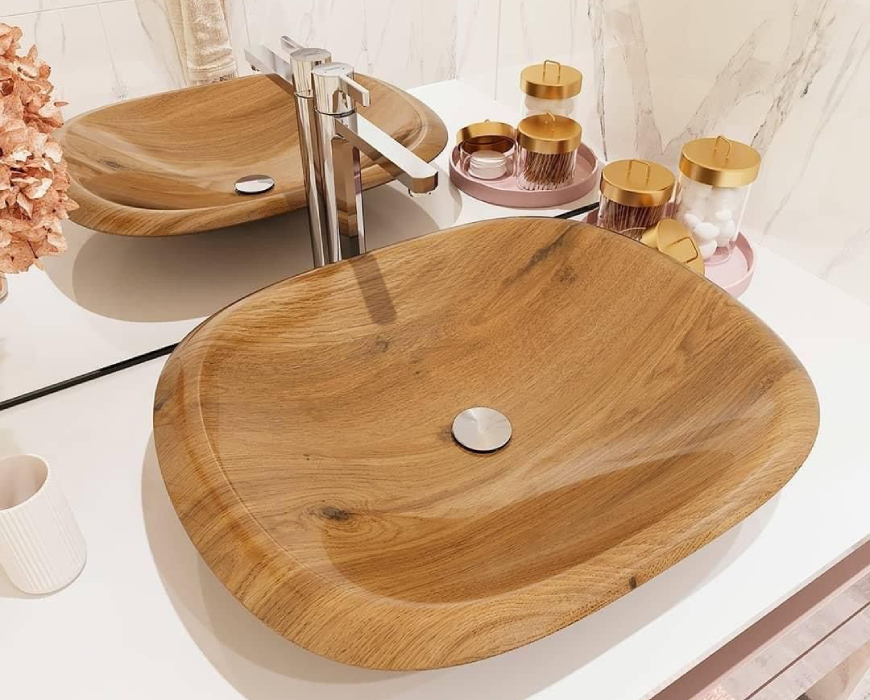
Contemporary interior design is gradually moving away from cold minimalism in favour of vibrant, natural materials. The bathroom is no longer just a functional room – it is now a space for relaxation and aesthetic pleasure. That is why wood, with its unique texture and natural energy, is becoming one of the most sought-after materials in bathroom design, breaking the stereotype that water and wood cannot coexist.
The manufacturing process
Creating a sturdy wooden washbasin is a complex engineering process that requires precision craftsmanship during production. The manufacturing process can be carried out in two ways, depending on the desired visual effect and structural requirements.
Working with solid wood involves the use of large, solid slabs of timber that have undergone prolonged kiln drying to a moisture content of 6–8%. This allows the washbasin bowl to be shaped and finished from a single piece of wood, preserving the integrity of the natural grain; however, this method requires extremely precise and meticulous machining on CNC milling machines, which, in particular, helps to reduce internal stress in the wood fibres.
A more technologically advanced and resistant to geometric deformation is the cross-lamination method, where individual lamellae are bonded under high pressure using water-resistant D4-grade adhesives. In this structure, the fibres of adjacent layers are arranged perpendicular to one another, which effectively “locks” the wood and makes it impervious to deformation under the influence of steam and hot water.
Coating
As wood is a natural material, it requires thorough protection against direct contact with water. The treatment process involves several stages of deep preservation. First, the product undergoes vacuum impregnation with antiseptics, which protect it from any biological damage.
Next, a multi-layer protection system is applied. Modern technologies allow the use of specialised epoxy resins or polyurethane composites, which fill every pore of the wood at a molecular level. They create a monolithic, completely airtight barrier with a strength comparable to liquid glass. The final stage involves coating the surface with a durable varnish containing UV filters, which protects the wood from fading and the effects of household chemicals. Thanks to this approach, water simply rolls off the surface without penetrating the wood fibres.
Use and care instructions
A wooden sink does not require particularly complex care, but it does require a certain approach to its use. To clean the surface, use mild, non-abrasive products that do not contain chlorine or harsh solvents. Over time, any glossy or semi-matt surface may lose its original shine due to fine scratches or limescale from hard water.
However, unlike ceramics, where the only option if the glaze is damaged is to replace the item, a wooden washbasin can be fully restored. If, after several years of intensive use, a film or a network of micro-scratches appears on the surface, the item can easily be restored through professional polishing.
Installation features
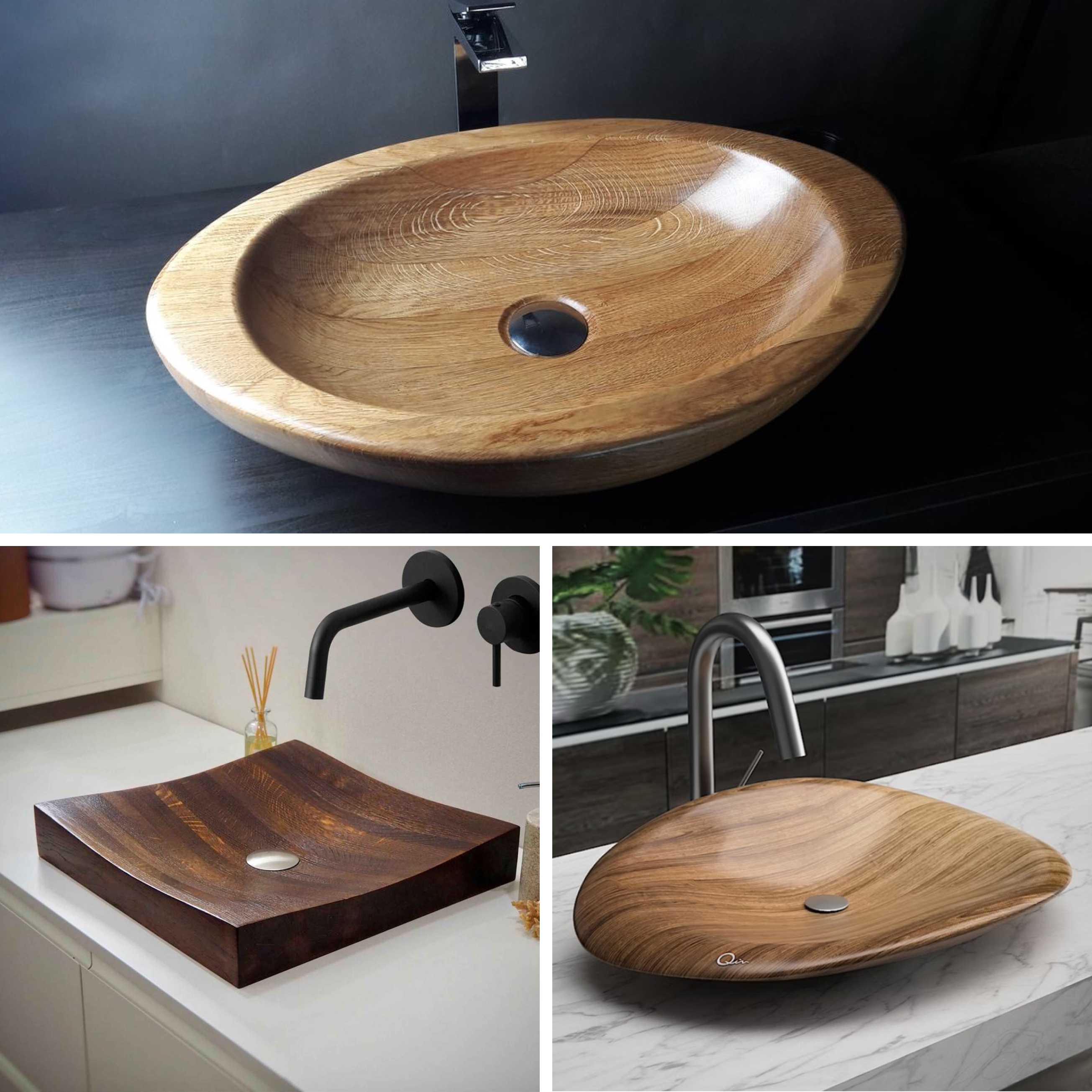
The process of installing a wooden washbasin has its own nuances. Most often, they are manufactured as countertop-mounted basins, which are fitted on top of the worktop. This allows the natural beauty of the material to be fully appreciated from all angles. Particular attention is paid to sealing the joints with the siphon: special elastic gaskets are used to ensure a tight fit without squeezing or damaging the wood structure at the drain point.
Areas of application
Thanks to their unique aesthetic appeal, wooden washbasins become a focal point in a wide variety of settings. They are ideal for private apartments and country homes, where owners seek to create an atmosphere of cosiness and sustainability. Combined with natural stone or an abundance of greenery, such a piece transforms an ordinary bathroom into a personal oasis of relaxation.
Wooden products occupy a distinct niche in the HoReCa sector. Luxury hotels, chalets, country estates and premium-class restaurants use them in guest bathrooms as an element that instantly emphasises the establishment’s high status.
Wooden basins are also indispensable for Spas and Wellness centres. In relaxation areas, where every detail matters, natural materials help to promote psychological relaxation.
The uniqueness and value of each piece
The main value of a wooden washbasin lies in the fact that no two pieces are exactly alike; each one is unique. You are acquiring a genuine work of art, created by nature and perfected by the hand of a master craftsman.
It is important to understand that wooden washbasins belong to the premium segment of sanitaryware. By way of comparison, the cost of a similar premium-segment ceramic bowl-shaped washbasin as of 2026 averages between 8,000 and 15,000 UAH, whereas the wooden washbasin pictured below will cost approximately 39,000 UAH. This is entirely justified by the use of expensive raw materials, the complexity of the manufacturing processes, and the significant amount of manual labour involved.
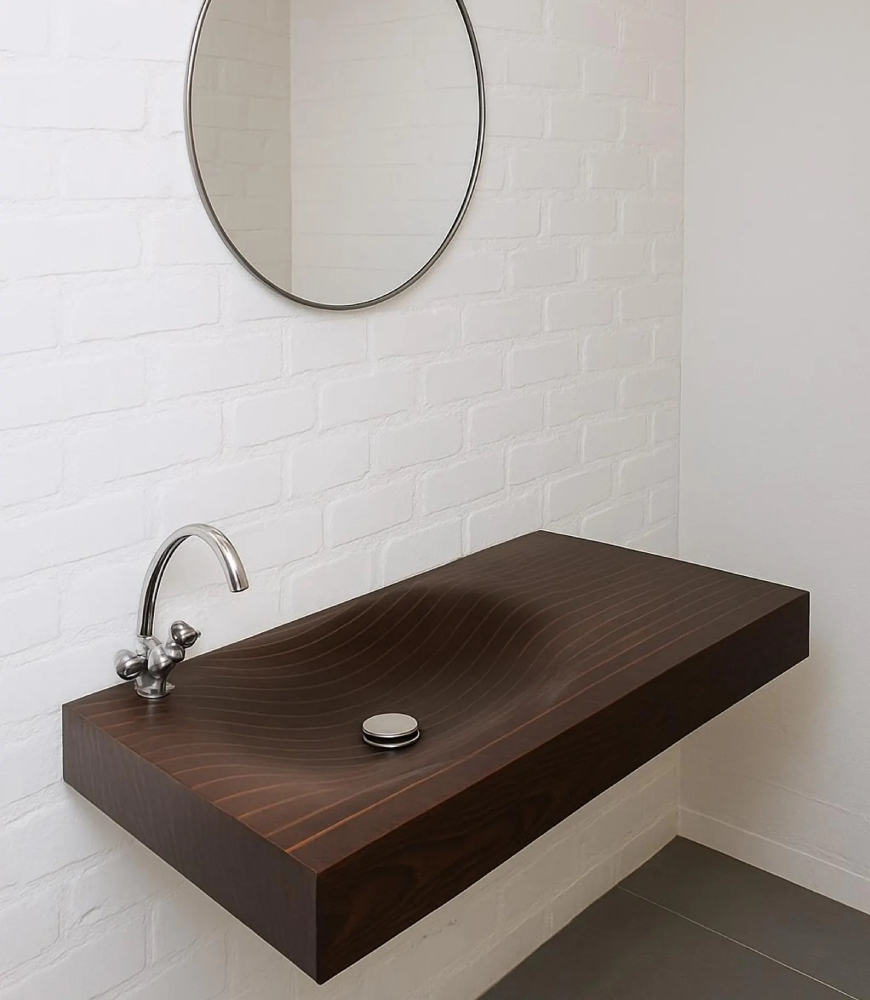
The final cost of each project is calculated individually upon request, as it depends directly on the chosen wood species, dimensions, and the complexity of the bowl’s shape.
We are ready to advise you on all technical details and discuss prices and delivery within Ukraine and abroad. To design and manufacture your unique wooden washbasin for your home, office or HoReCa establishment, please contact us via the following details:
Email: info@ligno.com.ua
Phone: +380 73 221 44 81
Live Chat: click to start
Leave your feedback Cancel reply