

Custom-made case furniture
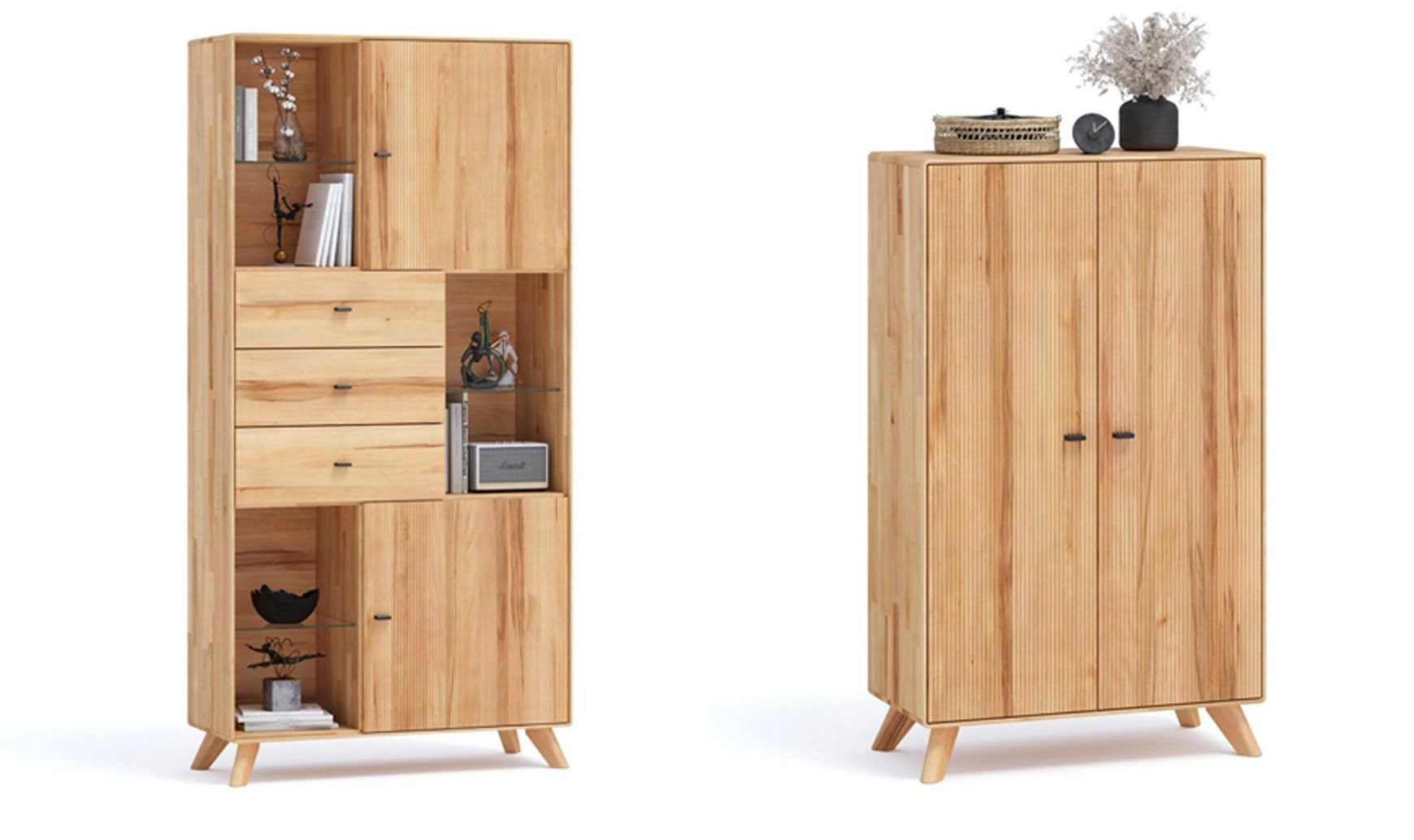
Modern case furniture is not just functional interior items, but the result of careful design, craftsmanship and an approach that takes every detail into account.
This is especially true for custom-made solid wood case furniture, which is not mass-produced, but individually tailored to the space, style and needs of the customer. This approach makes it possible to obtain a product that fits perfectly into a specific room, meets the user's ergonomic requirements and emphasises the character of the home.
What is case furniture?
Case furniture is furniture based on a rigid structure, or case. It is the frame that is responsible for the stability, geometry and durability of the furniture. Unlike upholstered furniture, cabinet furniture has a clear shape and consists of side panels, a bottom, shelves, a back wall and facades. Thanks to this, it remains strong and reliable even with intensive use.
Wood-based panels (chipboard, MDF, fibreboard) and solid wood (mainly hardwoods such as oak, beech, ash, alder and others), which are distinguished by their natural beauty, environmental friendliness and durability, are used to manufacture cabinet furniture. A combination of solid wood and wood-based panels is also used in the interior of the frame; for example, shelves or back walls can be made of high-quality chipboard or MDF to reduce the weight of the structure and optimise costs.
LIGNO specialises in the manufacture and sale of solid wood case furniture
Why solid wood? Because natural wood is not only aesthetic and prestigious, but also durable, eco-friendly and safe. Solid wood can be processed throughout its entire thickness, unlike wood-based panels, which can only be processed on the surface. In addition, it does not contain synthetic adhesives and resins, as in chipboard, so the air in your home or office will be cleaner and healthier. It is worth noting that solid wood is a sustainable and renewable resource if it is harvested responsibly and legally, in accordance with the principles of sustainable forest management.
The main advantage of custom-made cabinet furniture is the ability to create a product that fully matches the user's space. Not only are the dimensions of the room taken into account, but also architectural features: niches, corners, sockets, household appliances, and colour scheme. Such individualisation makes each project unique – from a classic solid wood wardrobe to a modern kitchen or dressing room system designed specifically for the customer.
Types of case furniture
Case furniture is divided into several main types, depending on its purpose, functionality and design features.
– Kitchen furniture: modular systems combining cabinets of various sizes, cupboards, worktops and decorative fronts. Solid wood gives the kitchen a solid look, and the moisture-resistant construction ensures stability even in high-humidity conditions.
– Cupboards and wardrobes: classic cabinets with wooden fronts or compartment doors. Solid wood elements add durability to the furniture, while the MDF interior reduces weight.
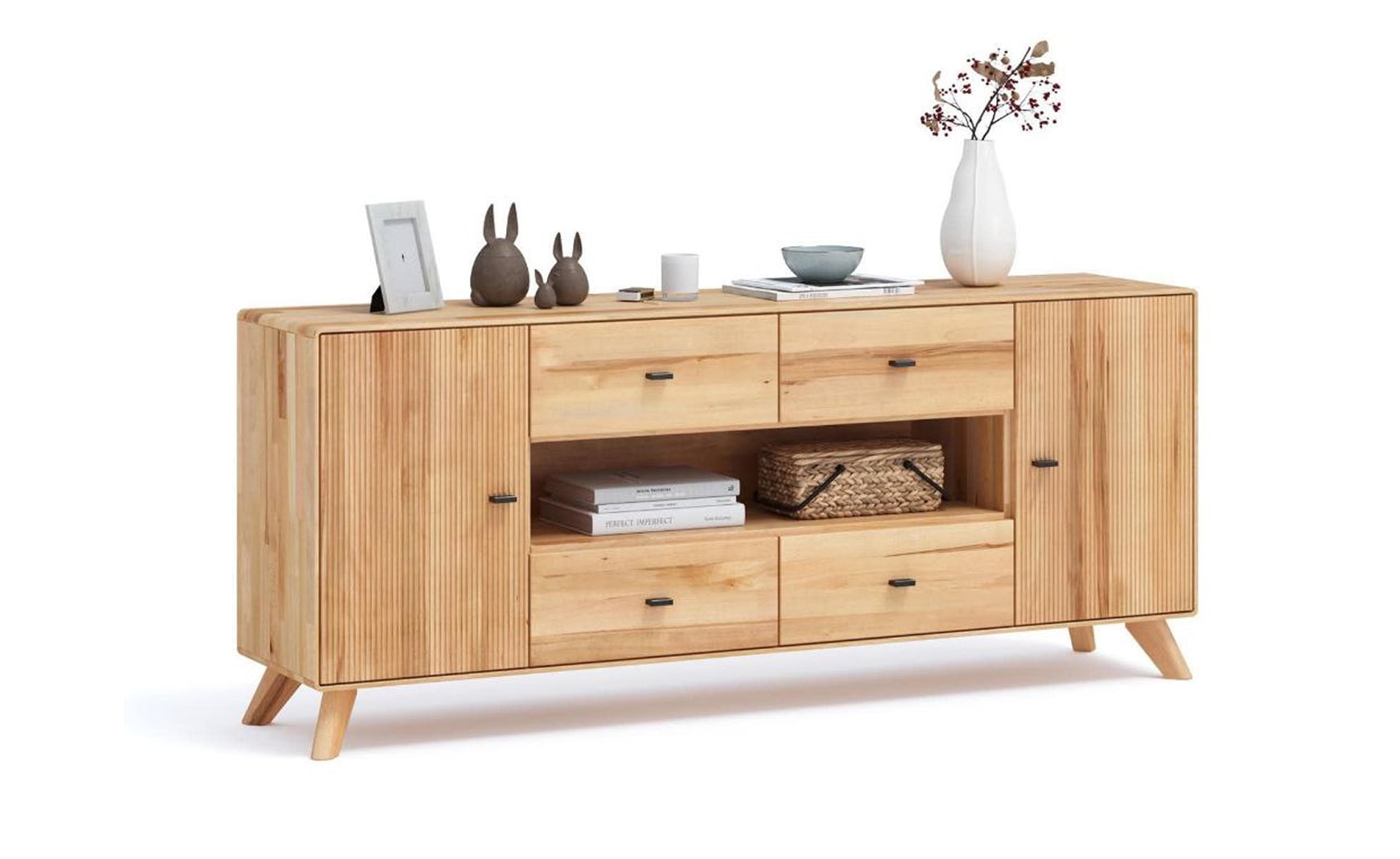
– Chests of drawers, side tables, wall units: cabinet elements, most often made of oak or beech. They combine practicality and aesthetics, becoming a focal point in the living room or bedroom.
– Office cabinet furniture: cabinets, shelves, tables with wooden frames or combined elements that create a business style while preserving the naturalness of the material.
– Built-in systems: cabinets created to the exact dimensions of the room are a trend in recent years that allows for the most efficient use of space.
How to choose case furniture?
When choosing custom-made case furniture, it is important to consider the material, type of joints, fittings and wood finish.
– Facades and visible parts: choose solid oak, beech or ash – these woods are moisture resistant, have a distinctive texture and are easy to renovate.
– Internal surfaces: high-quality chipboard or MDF can be used for shelves and back walls – this reduces weight and cost without compromising functionality.
– Cabinet joints: reliable options include tongue and groove, dowels, confirmats or metal brackets, which guarantee durability even after many years of use.
– Fittings: hinges with closers, full extension slides, push-to-open systems – for convenience in everyday use.
– Finish: natural oils, waxes or water-based varnishes that preserve the natural texture of the wood and protect it from moisture.
How is wooden case furniture manufactured?
The process of manufacturing custom-made case furniture consists of several key stages, combining technology, craftsmanship and design.
Measurements and design concept: a measurer records the exact dimensions of the room, determines the location of cabinets, shelves and facades, creates a 3D visualisation of the future furniture, and develops detailed drawings of the components together with a technologist.
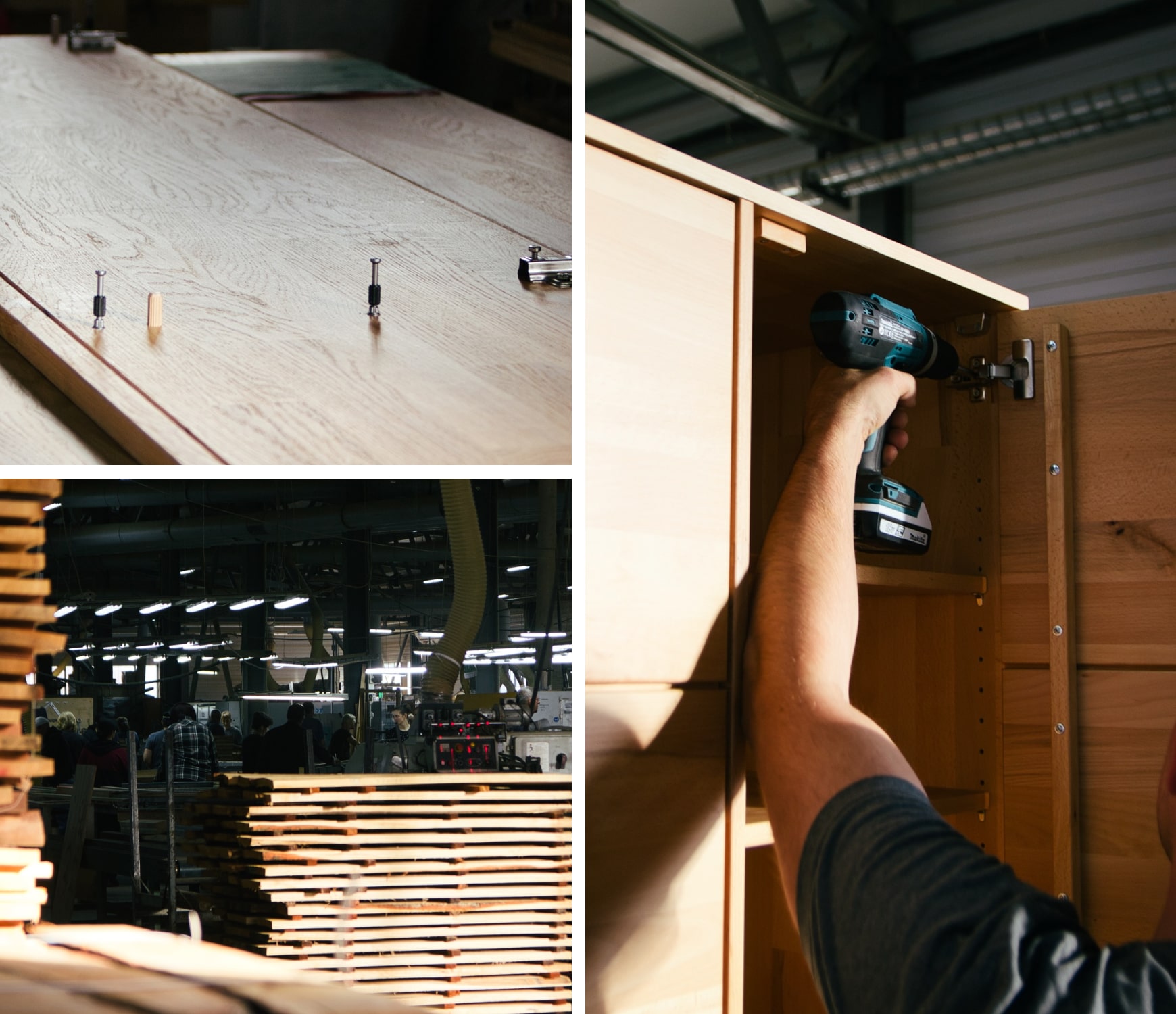
Selection and preparation of wood: the required type of sawn timber is selected, dried in chambers to a moisture content of 8–12%, and sorted by texture and colour.
Glueing of wooden panels: the panels are joined under pressure to obtain stable parts for the fronts and cabinets.
Cutting parts: facades, side panels, shelves, and back walls are cut from prepared furniture boards and wood-based panels on a panel saw.
Drilling holes: holes for fittings are drilled on a drilling and milling centre or a drilling and tapping machine.
Finishing: the surface of the parts is sanded, tinted or varnished; moisture-resistant coatings are used for kitchens and bathrooms.
Assembly and fittings: if the furniture is sold assembled, hinges, guides, handles and opening systems are installed; if the furniture is sold unassembled, the necessary amount of fittings is packed, and assembly instructions are developed.
Packaging and delivery: furniture is delivered assembled or disassembled; assembled furniture is protected with foam and cardboard, and disassembled furniture is packed in flat boxes on pallets for safe transportation in Ukraine and abroad.
Usually, the manufacture of cabinet furniture takes from 2 to 6 weeks, depending on the volume, complexity and production load.
The Ukrainian and global markets: demand for case furniture
Demand for custom-made case furniture in the European Union is growing most rapidly in Germany, the United Kingdom, France, Poland and Scandinavia. According to MarketReportsWorld, these countries account for more than two-thirds of the European case furniture market, with an emphasis on custom kitchen and wardrobe systems. In Scandinavia, according to Pro-Consulting, there is a growing demand for custom-made wooden case furniture that combines functionality and minimalist design.
In Ukraine, the market for modular furniture and interior solutions is also showing growth. For example, the Ukraine Furniture & Modular Interiors Market report estimates this segment at approximately $615 million, noting the growing demand for modern and customised solutions.
In addition, foreign customers and large projects in the HoReCa sector (hotels, restaurants, cafes), as well as office and commercial spaces, are increasingly ordering ‘custom-made’ furniture, i.e. products manufactured according to individual technical specifications or architectural designs. The State Catalogue of Ukrainian Furniture Exports mentions this format as a competitive advantage of Ukrainian manufacturers – it is precisely the ability to work with custom orders, adapting to the customer's interior, that allows our companies to participate in European tenders and international design projects.
Conclusion
Custom-made solid wood cabinet furniture is not just a household item, but a part of a lifestyle. It is created individually – for a specific space, purpose, and person. Unlike factory-made counterparts, such furniture takes everything into account – from the architecture of the room to the habits of the owner.
Leave your feedback Cancel reply